
Product · Sustainability
KraftPal and Sustainability
Rethinking Logistics for a More Sustainable Future
Global supply chains move trillions of dollars' worth of goods every year.
Behind every shipment is an extensive network of warehouses, manufacturing facilities, transport systems, distribution centres, and logistics infrastructure working together to keep the global economy moving.
At the centre of this system is one of its most overlooked components:
The pallet.
Although simple in appearance, pallets influence transportation efficiency, material consumption, warehouse operations, product protection, and supply chain performance across virtually every industry.
As sustainability became an increasingly important global priority, a fundamental question emerged:
Could one of the world's oldest logistics products be redesigned for the needs of a modern, more sustainable economy?
KraftPal was created to help answer that question.
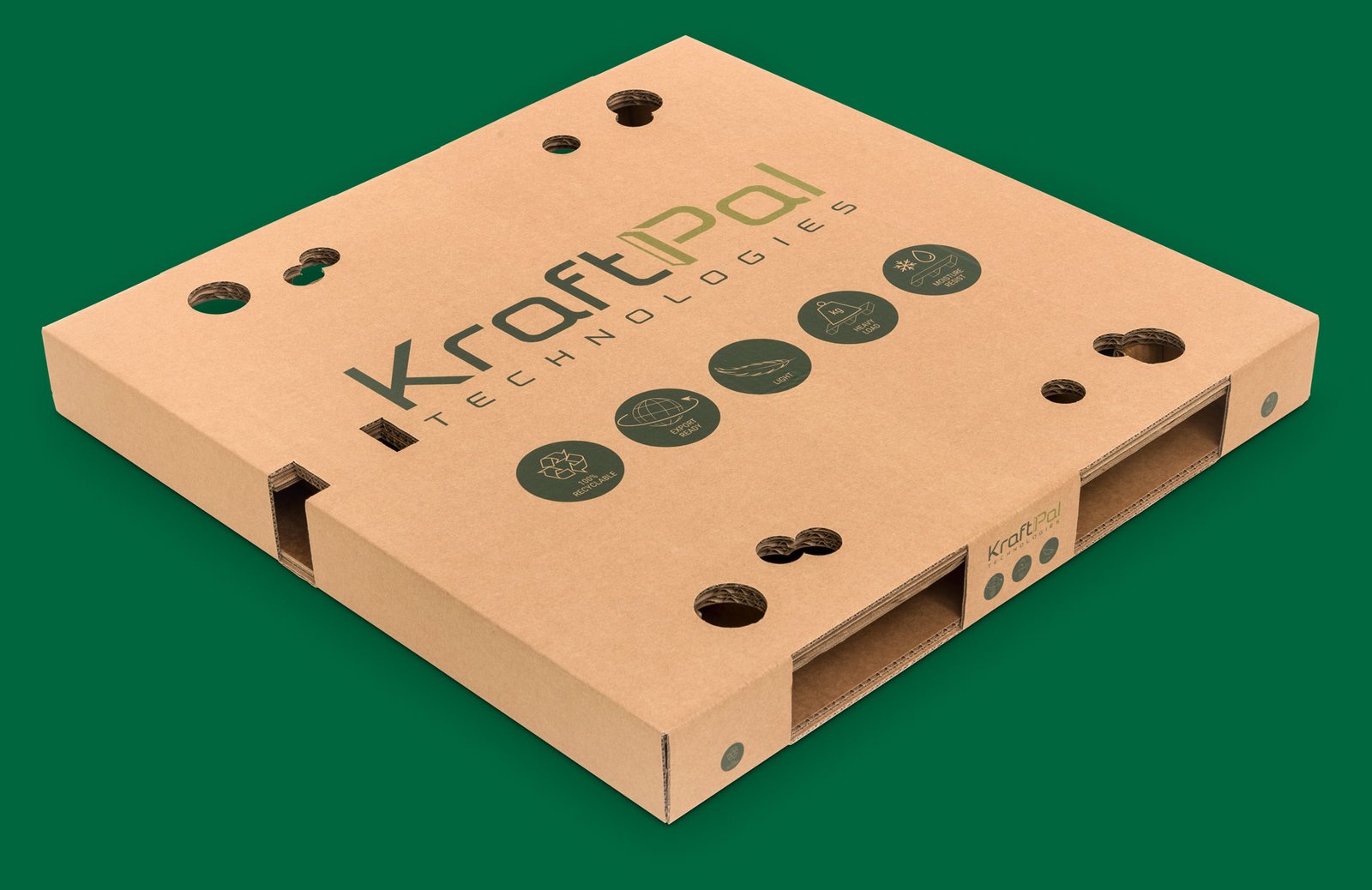
Sustainability Begins with Better Design
True sustainability is not achieved by adding environmentally friendly features to existing products.
It begins at the design stage.
Every engineering decision influences:
● Material consumption.
● Manufacturing efficiency.
● Transportation performance.
● Operational handling.
● Product lifecycle.
● End-of-life recovery.
By approaching pallet development as an engineering challenge rather than simply a manufacturing process, KraftPal explored how intelligent design could contribute to more efficient logistics systems.
Sustainability is often the result of thousands of small engineering improvements working together.
Circular Economy Thinking
The global economy is gradually moving away from the traditional linear model of:
Take.
Make.
Dispose.
Instead, industries are increasingly adopting circular economy principles that seek to maximise resource efficiency while extending material value throughout multiple stages of use.
Within logistics, this shift encourages organisations to consider not only product performance but also:
● Responsible material selection.
● Manufacturing efficiency.
● Resource optimisation.
● Recovery and recycling systems.
● Waste reduction.
● Long-term environmental impact.
Corrugated fibre-based engineering aligns with many of these broader circular economy objectives by encouraging efficient material utilisation and compatibility with well-established paper recovery and recycling infrastructures in many markets.
The future of logistics will increasingly depend on designing products with their entire lifecycle in mind.
Sustainable Supply Chains
Modern supply chains are no longer evaluated solely on cost and speed.
Increasingly, businesses are also considering resilience, efficiency, transparency, and environmental performance.
Customers.
Investors.
Governments.
And multinational corporations are placing greater emphasis on responsible sourcing and sustainable operations.
As a result, logistics infrastructure is evolving.
Innovations that improve operational efficiency while supporting broader sustainability objectives are becoming increasingly important within global supply chains.
KraftPal was developed within this changing landscape.
Engineering for Resource Efficiency
One of the most important principles behind sustainable engineering is achieving greater performance with more efficient use of resources.
Rather than relying on increased material consumption, engineering seeks to optimise structure, geometry, manufacturing precision, and functional performance.
This philosophy guided KraftPal's development.
The objective was not simply to replace an existing product.
It was to investigate how engineering innovation could improve efficiency throughout the logistics system.
When multiplied across large-scale supply chains, even relatively small efficiency improvements have the potential to create meaningful operational benefits.
Packaging Is Becoming Intelligent
Packaging is undergoing one of the most significant transformations in its history.
It is no longer viewed solely as protection for products.
It has become part of a broader system that includes:
● Automation.
● Digital tracking.
● Material innovation.
● Warehouse optimisation.
● Circular economy initiatives.
● Supply chain resilience.
Future packaging solutions will increasingly combine engineering, sustainability, data, and operational efficiency.
KraftPal reflected this broader shift by treating pallets as engineered infrastructure rather than simple transport platforms.
ESG and Industrial Innovation
Environmental, Social and Governance (ESG) considerations continue to influence how organisations evaluate long-term business performance and risk.
While ESG frameworks vary between industries and jurisdictions, many organisations increasingly assess technologies according to factors such as:
● Responsible resource management.
● Operational efficiency.
● Innovation capability.
● Product stewardship.
● Governance standards.
● Long-term resilience.
Engineering innovations that contribute to more efficient industrial systems can support broader sustainability and ESG objectives when implemented responsibly and supported by appropriate evidence.
KraftPal was developed during a period in which sustainability was becoming an increasingly important driver of industrial innovation.
Reducing Complexity
Sustainability is often associated with new technologies.
In reality, it is frequently achieved through simpler, smarter systems.
Better design.
Better engineering.
Better material utilisation.
Better logistics.
Every improvement contributes to a more efficient supply chain.
Engineering should remove unnecessary complexity wherever possible while maintaining performance, reliability, and commercial viability.
This philosophy guided KraftPal from its earliest stages of development.
The Future of Logistics
The logistics industry continues to evolve rapidly.
Automation.
Artificial Intelligence.
Robotics.
Digital supply chains.
Predictive analytics.
Smart warehouses.
Advanced materials.
These technologies are reshaping how goods move around the world.
At the same time, environmental responsibility is becoming increasingly integrated into logistics strategy rather than treated as a separate initiative.
Future logistics systems will require solutions that combine engineering excellence with operational efficiency and responsible resource management.
Innovation will increasingly focus on building systems that are not only more productive, but also more resilient and adaptable.
Beyond the Pallet
Perhaps the greatest lesson from KraftPal was that sustainability is not achieved through individual products alone.
It is created through interconnected systems.
Products.
Manufacturing.
Transportation.
Warehousing.
Packaging.
Energy.
People.
Technology.
Capital.
When these systems work together, meaningful progress becomes possible.
That systems perspective would later influence the philosophy behind ZeeQuest Technologies and the broader concept of the Ecosystem Economy.
Looking Forward
The global logistics industry will continue to face significant challenges.
Growing populations.
Increasing demand.
Resource constraints.
Climate considerations.
Supply chain resilience.
No single innovation will solve every challenge.
Progress will come through continuous improvement, interdisciplinary collaboration, and engineering solutions that create value for businesses, society, and future generations.
KraftPal was one contribution to that journey.
Its legacy extends beyond engineering.
It represents a belief that even the most established industries can be reimagined when innovation, sustainability, and long-term thinking work together.
Because the future of logistics will not be defined by moving more products.
It will be defined by moving them more intelligently, more efficiently, and more responsibly.