Section 1
Every Journey Starts with a Problem
Long before ZeeQuest was founded, my entrepreneurial journey was driven by a simple belief:
Every industry can be improved when we challenge assumptions that others have accepted for decades.
Rather than searching for opportunities in emerging industries alone, I became fascinated by mature industries that had changed very little despite their global importance.
One of those industries was logistics.
Every day, billions of products move through global supply chains using one of the world's most overlooked pieces of infrastructure—the pallet.
Although essential to international trade, pallets had remained largely unchanged for generations.
That raised an important question:
Could one of the world's oldest industrial products be completely reimagined?
That question became KraftPal.
Section 2
Building KraftPal
KraftPal was created with a clear ambition:
To develop a lighter, more sustainable and more efficient alternative to traditional wooden pallets. What began as an engineering challenge quickly evolved into something much larger.
Building KraftPal required far more than designing an innovative product.
It demanded expertise in manufacturing, intellectual property, international business development, commercialisation, investment, strategic partnerships and global execution.
As Founder and Chief Executive Officer, I had the opportunity to work alongside exceptional engineers, partners, customers and advisors while introducing new ideas into one of the world's most established industries.
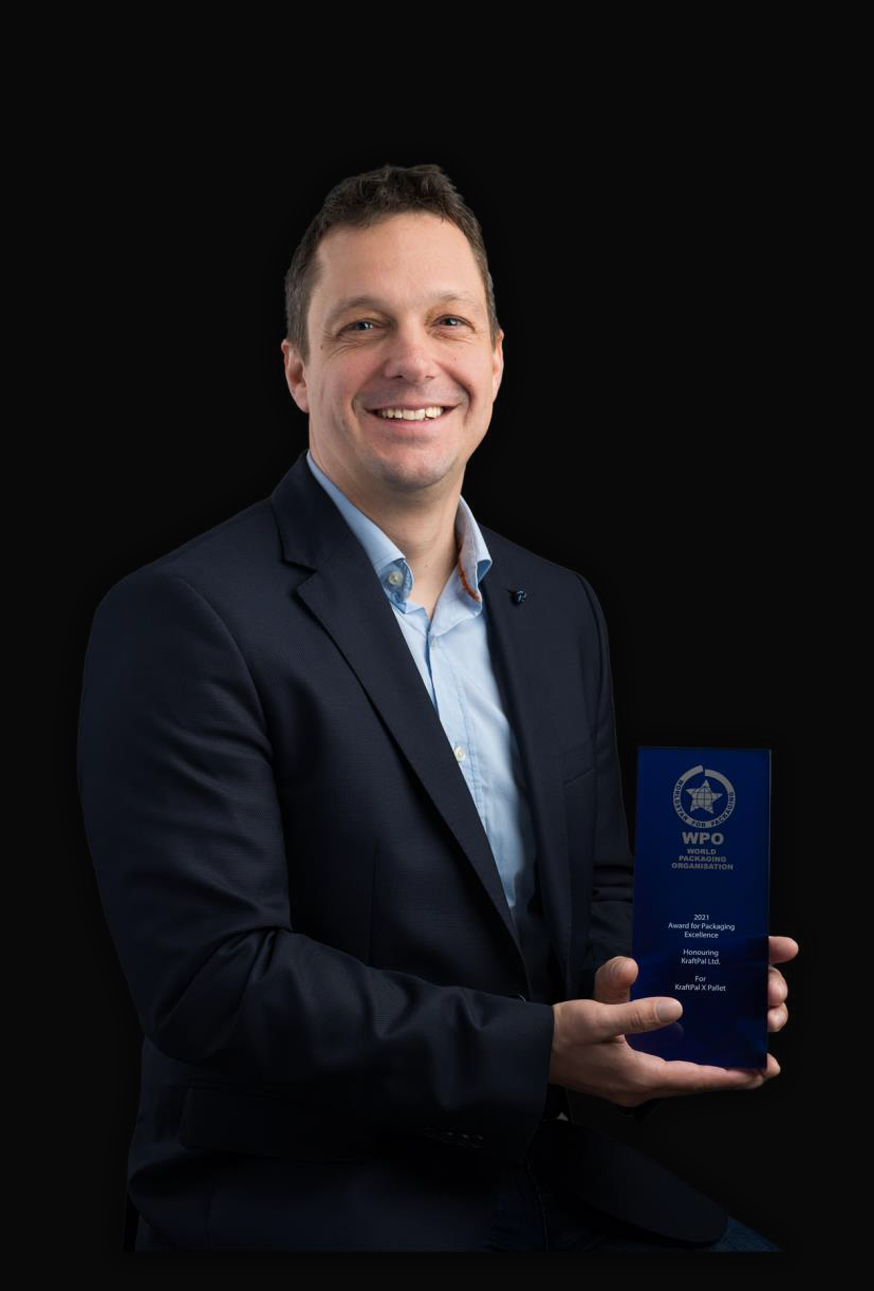
Over time, KraftPal received international recognition for innovation and sustainability, attracted global attention and demonstrated that even traditional industries can be transformed through bold thinking and disciplined execution.
Yet the greatest lessons were not found in the awards.
They came from the journey itself.
Section 3
The Lessons KraftPal Taught Me
Looking back, KraftPal was far more than an industrial technology company. It became a real-world education in how innovation succeeds—or fails.
I learned that technology alone is never enough. Long-term success depends on the interaction between multiple systems. Innovation must be supported by intellectual property. Products require capital. Capital requires trust. Trust is built through leadership. Leadership depends on people. People create ecosystems.
For the first time, I began to see businesses not as isolated organisations, but as interconnected systems whose value grows through collaboration.
That insight fundamentally changed the way I think about entrepreneurship.
Section 4
From Products to Ecosystems
As KraftPal expanded internationally, another pattern became increasingly clear. The world's most valuable organisations were no longer defined by a single product.
They were building platforms. Communities. Networks. Infrastructure. Entire ecosystems capable of continuously creating new value. This observation reshaped my own ambitions.
Instead of asking:
"How do we build another successful company?"
I began asking:
"How do we build an ecosystem capable of creating many successful companies?"
That question eventually became the foundation of ZeeQuest.
Section 5
The Birth of the Ecosystem Economy
The concept of the Ecosystem Economy did not emerge overnight.
It evolved gradually through years of entrepreneurship, international expansion and practical experience.
Working across industrial innovation, technology commercialisation, strategic partnerships and investment revealed a consistent pattern:
The future belongs to organisations that integrate technology, intellectual property, capital, communities and shared purpose into a single collaborative system.
Rather than creating isolated businesses, the next generation of organisations will create environments where innovation can continuously emerge.
This philosophy became the foundation upon which ZeeQuest was established.
Section 6
Why ZeeQuest Was Different
ZeeQuest was never intended to become another technology company.
It was designed as an ecosystem.
An environment capable of identifying transformative opportunities, developing proprietary technologies, attracting strategic capital and supporting entrepreneurs capable of solving meaningful global challenges.
Every initiative within ZeeQuest reflects the same philosophy. Navigator explores decision intelligence. Daty.ai explores human connection. ZeeCapital strengthens innovation through capital formation. ZQ Organic applies intelligent systems to sustainable agriculture.
Future ventures will continue expanding the ecosystem into new industries. Different sectors. One philosophy.
Section 7
One Journey. Many Chapters.
Looking back, it is clear that KraftPal was never the destination. It was the beginning.
It taught me that innovation extends far beyond technology. It begins with curiosity. It grows through persistence. It succeeds through collaboration.
And it reaches its full potential when individual innovations become part of something much larger than themselves.
KraftPal changed how I viewed business. ZeeQuest became the result of that new perspective.
The journey continues with a single objective:
To build intelligent ecosystems capable of creating lasting value for people, businesses and society.